When investing $8,000 to $15,000 into a backyard oasis, the most common question homeowners ask is: "How many years should a hot tub last?"
The short answer is that a high-quality acrylic hot tub from a reputable manufacturer (like Jacuzzi, Hot Spring, or Sundance) should last 15 to 20 years. However, lower-end rotationally molded (rotomolded) spas or inflatable tubs typically only survive 3 to 7 years.
But a hot tub is not a single, indestructible object. It is a complex ecosystem of plumbing, electrical circuits, and mechanical pumps constantly exposed to extreme heat, harsh sanitizers, and freezing winter weather. While the shell might last 20 years, the internal components will absolutely fail and require replacement long before then.
In this guide, we break down the true lifespan of a hot tub component-by-component, explain the hidden factors that destroy spas prematurely, and outline exactly what you can do to maximize your investment.
The Lifespan of Core Hot Tub Components
If you understand that hot tubs are like cars—requiring periodic replacement of "wear and tear" parts—you will have a much more realistic expectation of spa ownership. Here is how long the core components actually last under normal usage:
1. The Acrylic Shell and Cabinet (15 - 20+ Years)
The actual vessel holding the water is incredibly durable. High-end spas are manufactured by vacuum-forming a sheet of Lucite acrylic and then reinforcing the back with thick layers of fiberglass and polyurethane foam. Unless the spa is dropped during a move or left completely empty in direct, baking UV sunlight for years (which causes the acrylic to blister and delaminate), the shell should easily last two decades.
Note: If you do experience surface blistering, do not throw the tub away. You can hire a professional for Spa Acrylic Shell Repair to restore the structural integrity.
2. The Spa Cover (3 - 5 Years)
Hot tub covers take the brunt of the environmental abuse. They endure heavy snow loads, direct UV radiation, and constant bombardment from the corrosive chemical off-gassing of the hot water below. Over time, the vapor barrier surrounding the internal foam cores will break down. Once the foam becomes waterlogged, the cover will weigh 100+ pounds and lose all of its thermal insulation properties. You should expect to buy a new cover every 3 to 5 years.
3. The Circulation and Jet Pumps (5 - 10 Years)
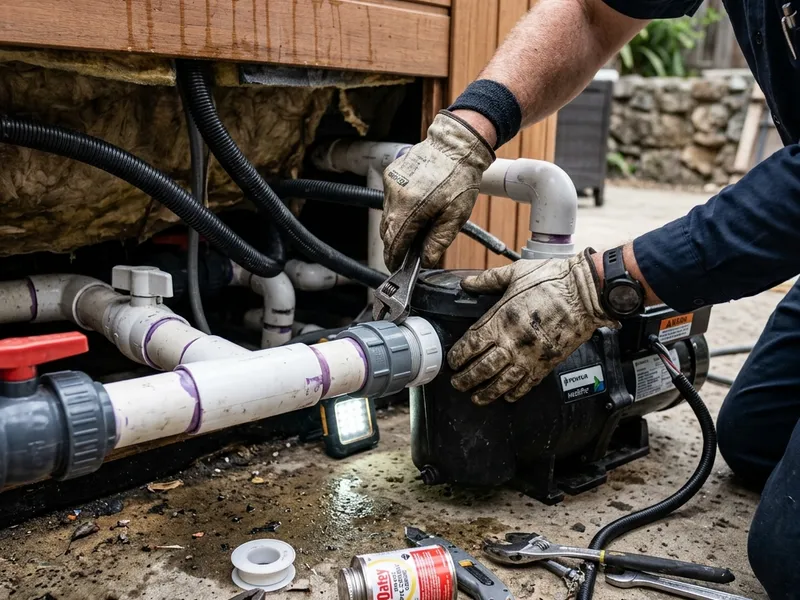
Pumps are the beating heart of your spa. The electric motor itself can last a decade, but the mechanical pump seal (the ceramic and graphite barrier that keeps water out of the motor) is the weak link. If your water chemistry is consistently too acidic, the low pH will eat through the rubber seal, allowing water to flood the motor bearings. Once you hear a loud screeching or grinding noise, the bearings are destroyed. Replacing the wet-end or the entire motor is a standard Hot Tub Pump Repair.
4. The Heater Element (3 - 7 Years)
The heater element is submerged in chemically treated water 24/7. Just like a pump seal, highly acidic water or excessive calcium hardness (scale) will rapidly destroy the Incoloy or titanium casing of the element. When the element shorts out, it will instantly trip your GFCI breaker. If you maintain perfect water chemistry, a heater can last 7 years; if you neglect it, you'll be replacing it every 2 years.
Need Professional Hot Tub Repair?
We have verified technicians available nationwide.
5. The Control Board / Spa Pack (7 - 12 Years)
The main circuit board (often made by Balboa or Gecko) is highly reliable, but it is constantly switching 240-volt high-amperage loads. Over the span of a decade, the mechanical relays on the board will eventually burn out from thousands of heating and pumping cycles. Power surges and lightning strikes can also instantly fry a control board. When this happens, you will need a professional Spa Control Board Repair.
The #1 Killer of Hot Tubs: Poor Water Chemistry
When a hot tub dies prematurely at the 4-year mark, it is almost never a manufacturing defect. It is almost always a result of poor water chemistry.
If you allow the pH of your water to drop below 7.2 (becoming highly acidic), the water becomes corrosive. Acidic water acts like a slow-moving battery acid, aggressively eating away at the copper heater elements, the rubber O-rings in the plumbing unions, and the mechanical seals inside the pumps.
Conversely, if your pH is too high and your calcium hardness is off the charts, the water becomes scale-forming. Thick, concrete-like calcium deposits will coat the inside of your heater tube and your plumbing lines, severely restricting water flow and causing your system to overheat and burn out.
The Solution: Test your water weekly using a high-quality liquid titration kit (like a Taylor Test Kit), not just cheap dip strips. If you struggle to maintain the delicate balance of pH, alkalinity, and sanitizer, strongly consider investing in a Monthly Hot Tub Maintenance Service. Paying a professional $150 a month to balance your water is significantly cheaper than replacing a $1,200 control pack and two $600 pumps because acidic water destroyed them.
The #2 Killer: Freeze Damage
If you live in a climate that experiences freezing winters (like Colorado, Minnesota, or New York), a power outage or a tripped breaker during a blizzard is a death sentence for a hot tub.
If the water inside the PVC plumbing lines and manifolds freezes, it expands with immense force. This expansion will shatter the PVC pipes, crack the wet-ends of the pumps, and split the stainless steel heater tube wide open. When the ice eventually thaws, the entire equipment bay will instantly flood. Freeze damage often causes over $3,000 in destruction, completely totaling the spa.
The Solution: If your hot tub breaks down in December and you cannot get a repair technician out immediately, you must act fast. Place a ceramic space heater inside the equipment cabinet (safely away from melting any plastic) to keep the ambient temperature above freezing. If you plan to leave the spa empty for the winter, you must hire a professional for a Hot Tub Winterization Service. Simply draining the tub is not enough; a massive air compressor must be used to blow every drop of water out of the internal lines.
Summary: Is It Expensive to Maintain a Hot Tub?
Maintaining a hot tub requires a commitment of time and money, but it is manageable if you stay proactive. You should budget approximately $300 to $500 per year for chemicals, replacement filters, and minor wear-and-tear items (like pillows and ozone generators).
You should also expect to face one major repair (a heater, pump, or topside panel failure) every 4 to 5 years, which typically costs between $400 and $800 depending on the component.
By treating your hot tub like a vehicle that requires regular oil changes and checkups, your spa will easily provide your family with 15 to 20 years of hydrotherapy and relaxation. If you ever run into a mechanical failure along the way, Find a Local Technician through our nationwide network for fast, reliable service.